
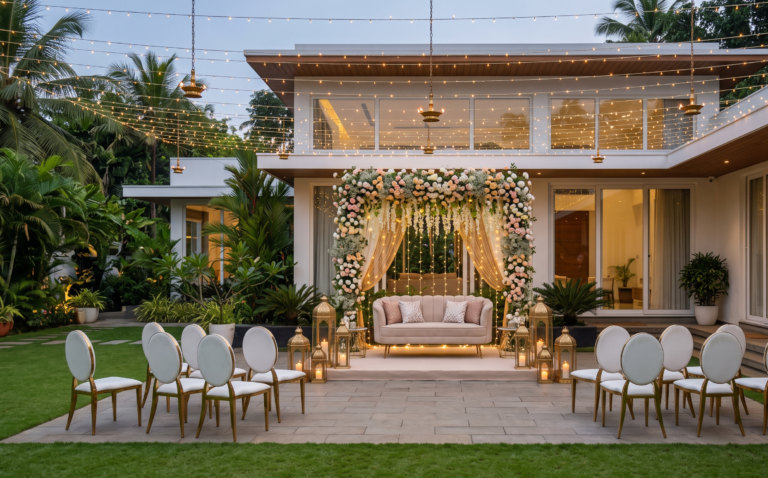
Every Malabar wedding season, families quietly compare notes on scale — how many halls, how many functions, how many guests. Somewhere in that comparison, the wedding itself stops being about the couple.
That instinct toward “more” isn’t wrong. It comes from wanting the day to feel special, something worth remembering. But here’s the thing — the parts people actually remember have rarely been the expensive parts.
This guide looks at the real Malabar wedding cost today. It also shows where a good chunk of it can shift — often close to ₹2 lakh. That’s the difference between things nobody remembers and things that actually stay with people.
One thing upfront: think of the numbers below as ballpark, not gospel. I pieced these together from public hall listings and typical vendor patterns in the region. Use them as a starting point for your own conversations, not something to quote back to a caterer.
What’s Actually Driving the Malabar Wedding Cost Up
It’s usually not the hall. Local wedding halls around Malappuram and Kozhikode tend to rent for somewhere between ₹15,000 and ₹80,000 a day — modest, next to everything else on the list.
The bigger driver is how many separate events a wedding now has. A modern Malabar wedding often adds a save-the-date shoot, a haldi ceremony, maybe a themed sangeet-style night — all stacked on top of the traditional milanji rather than replacing any part of it. Each one needs its own decor, its own outfit, its own makeup session, its own coordination.
Guest count pushes things up just as fast. Every extra name on the list adds to catering directly, and a longer guest list usually means a bigger hall, more decor, and more hours of coordination too.
A Rough Look at What Things Typically Cost
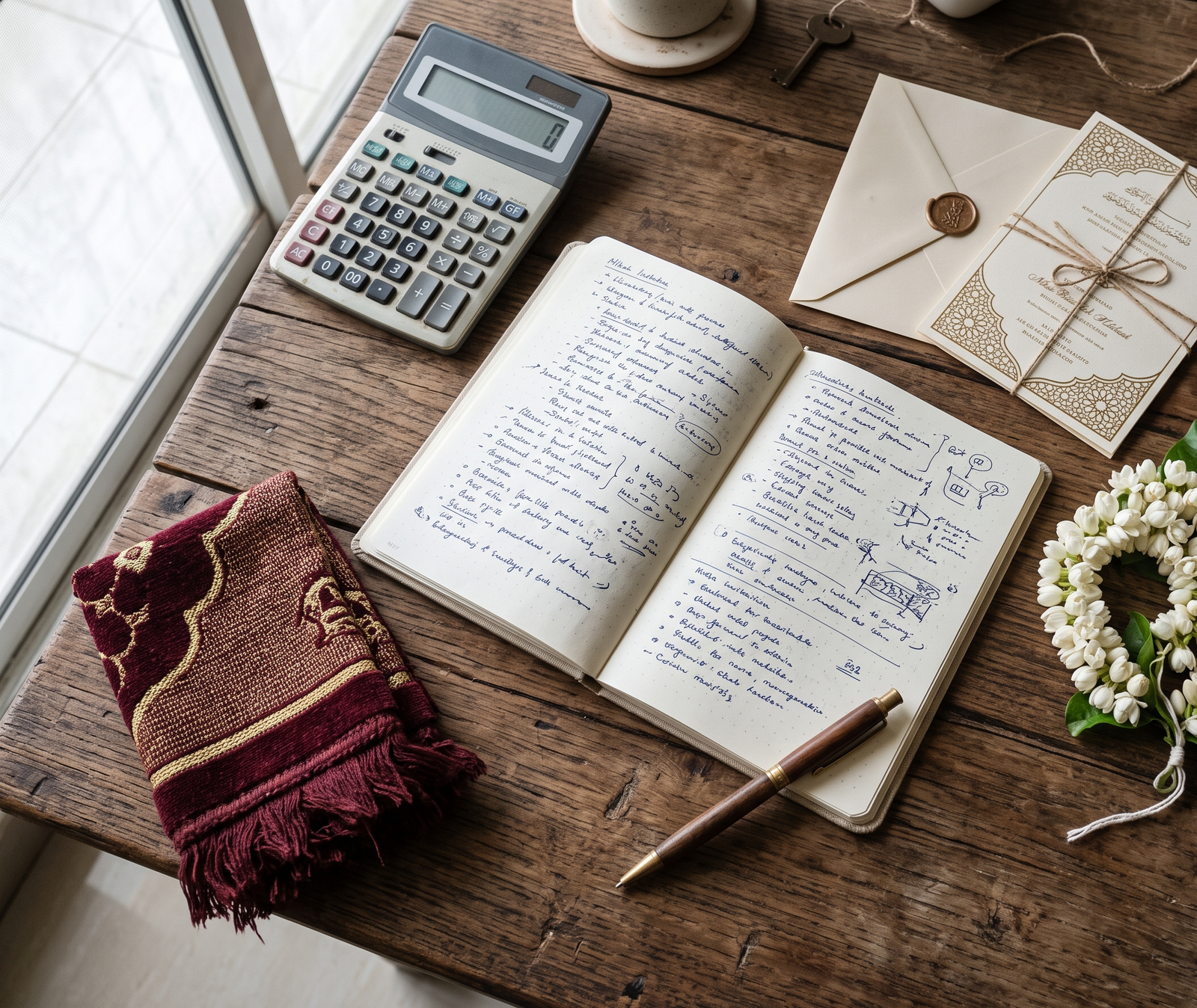
Again, treat these as approximate — real quotes will differ by vendor, by season, and by exactly what the package covers.
| Item | Typical Malabar Range (approximate) |
|---|---|
| Wedding hall (per day) | ₹15,000 – ₹80,000 |
| Catering (per plate, local hall) | ₹300 – ₹500 |
| Save-the-date / extra pre-wedding shoot | ₹9,000 – ₹15,000 |
| Milanji event (decor + artist + catering) | ₹30,000 – ₹40,000 |
| Haldi / themed sangeet-style event | ₹25,000 – ₹35,000 |
| Bridal outfit (per look) | ₹10,000 – ₹25,000 |
| Makeup session (per event) | ₹5,000 – ₹10,000 |
| Photography & videography (per event) | ₹9,000 – ₹15,000 |
| Event coordination | ₹25,000 – ₹40,000 |
Why the Crowd Costs More Than the Camera
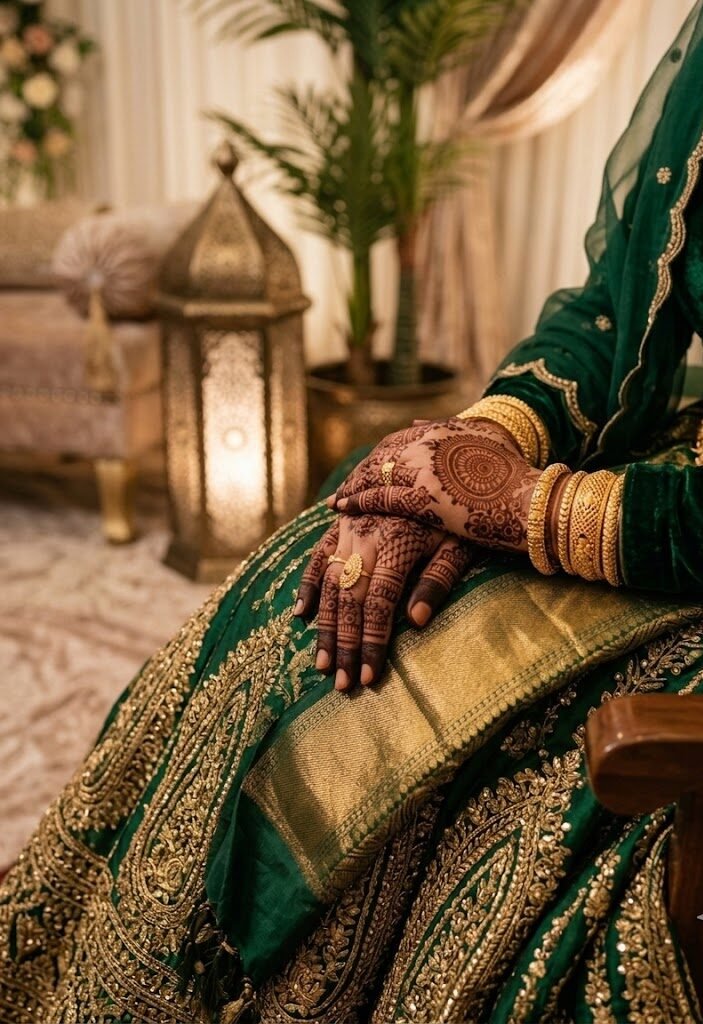
Photography and videography were probably never the real budget problem. At roughly ₹9,000 to ₹15,000 per event locally, documenting a wedding often costs less than one extra themed function.
The money usually goes to the guest list. Catering, decor, and coordination all climb with every additional guest. A smaller, closer gathering can cost a fraction of that.
This isn’t just a Malabar pattern, either. Broader wedding budgeting data shows venue and catering as the biggest line items nationally too. Both scale directly with guest list size.
It’s also, more often than not, the part people actually remember. Ask someone about their wedding years later, and it’s usually the quiet moments that come up. Getting ready with a few close people, the walk to the nikah, a laugh caught mid-photo — these are what stick. Almost nobody brings up the third function, or guest number two hundred.
Where the Real Savings Come From
The savings here don’t come from spending less on photography — that was already affordable. They come from not paying for the same handful of memorable moments five separate times, once per event.
| Item | Full trend-stack wedding (approx.) | Streamlined wedding (approx.) |
|---|---|---|
| Guest count | ~400–450 | ~150–180 |
| Hall | ₹50,000 | ₹40,000 |
| Catering | ₹1,68,000 | ₹72,000 |
| Save-the-date shoot | ₹12,000 | — (folded in) |
| Milanji event | ₹35,000 | ₹30,000 (combined day) |
| Haldi / themed event | ₹30,000 | — |
| Outfits | ₹45,000 (3 looks) | ₹18,000 (1 look) |
| Makeup sessions | ₹24,000 | ₹14,000 |
| Photography & videography | ₹24,000 (2 bookings) | ₹15,000 (1 team, both days) |
| Coordination | ₹32,000 | ₹10,000 |
| Total | ≈ ₹4,20,000 | ≈ ₹2,00,000 |
These, too, are ballpark. Your actual numbers will shift based on your vendors, your area, and what you decide to keep or drop.
A Sample Streamlined Wedding Plan
- One well-chosen hall for both the milanji and the nikah, held back-to-back instead of spread across separate days
- A close guest list for the intimate events, with a bigger reception kept simple if the family still wants one
- One outfit per person, chosen well, instead of several across different functions
- One trusted photography and videography team covering both days, instead of separate bookings for each event
What Doesn’t Change
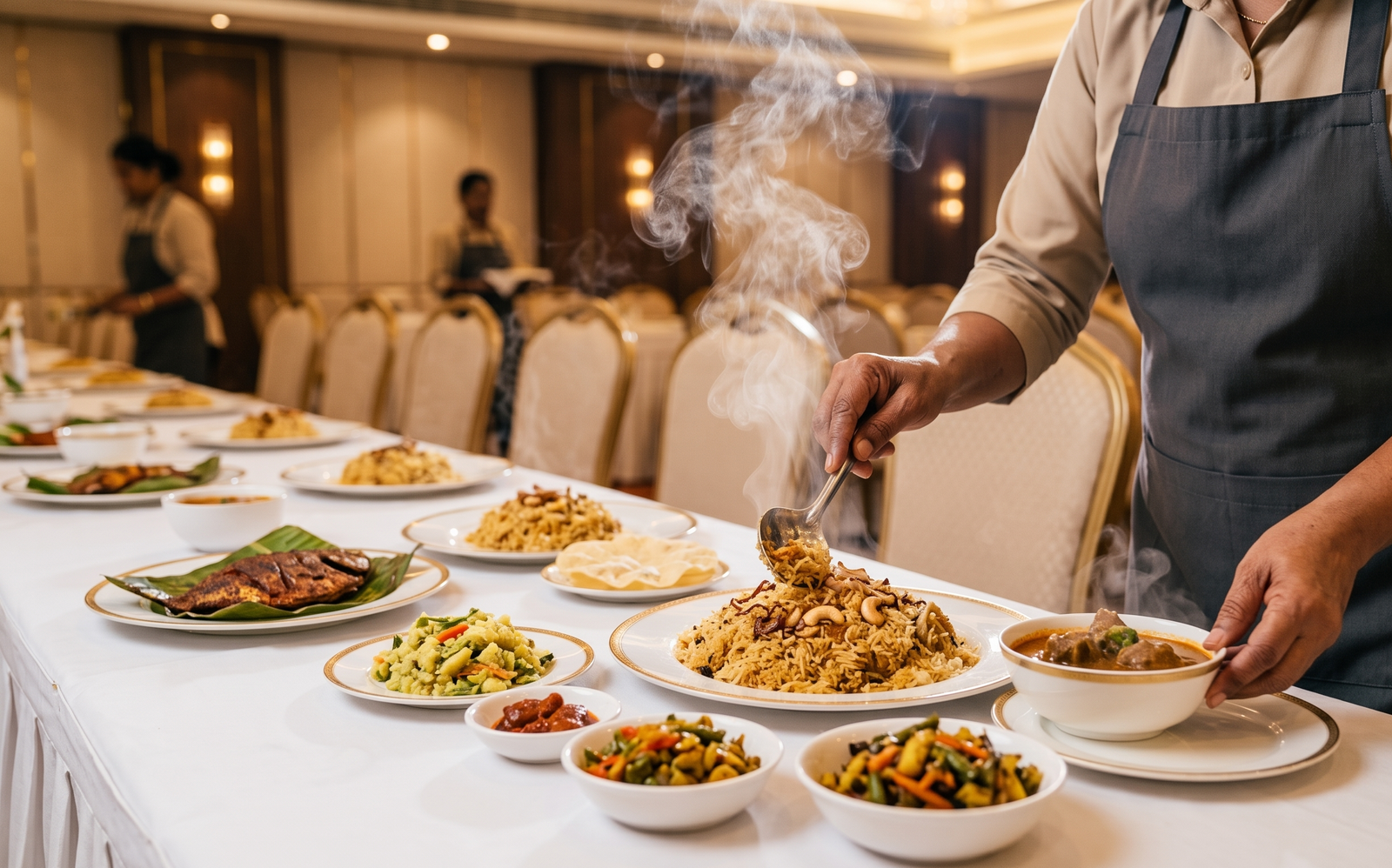
The milanji still happens. The nikah still happens. So does the feast, the family involvement, all the warmth the day is supposed to have. None of that goes away. What changes is how many times you end up paying separately for the same warmth.
Conclusion
Cutting the malabar wedding cost isn’t about making the wedding smaller in spirit. It’s about fewer repeated events and a smaller crowd at the moments that actually matter. Pay properly for those, instead of spreading the same money thin across five.
And that difference — call it approximately ₹2 lakh, give or take — is real money. That’s enough to fund a full year of a small income project. Arguably a better use for it than a fourth function nobody quite remembers anyway.