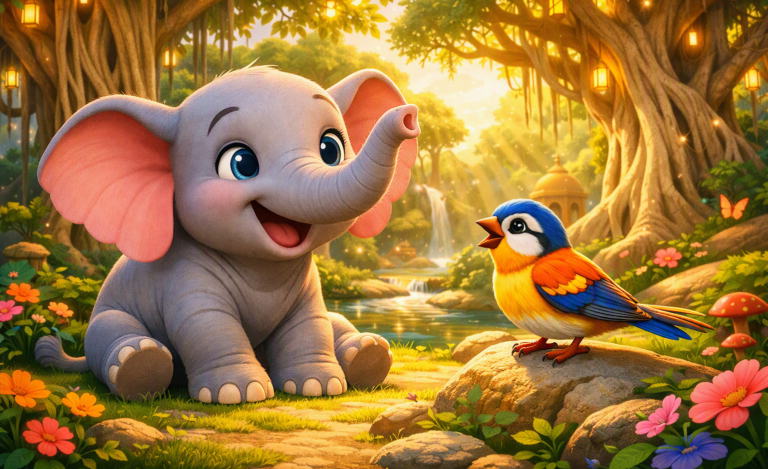
Starting an AI kids’ YouTube channel in India has quickly become one of the most profitable ways to build a faceless digital brand in 2026. Kids’ entertainment on YouTube is a massive traffic engine, pulling billions of monthly views across Hindi, Hinglish, and regional languages. Unlike adult viewers, children don’t just watch an animated story once—they repeat the same 5-minute video dozens of times.
Like building passive income ideas for students, launching an AI kids YouTube channel lets you leverage modern tools to generate recurring views without being on camera or trading every hour for cash.
The hurdle? You cannot mass-produce generic, robotic AI clips and expect YouTube to approve your AdSense account. YouTube strictly enforces policies regarding reused content, synthetic media disclosures, and the Children’s Online Privacy Protection Act (COPPA).
If you want to build a sustainable, monetizable kids’ channel that resonates with Indian audiences and parents, you need the right strategy, appropriate tools, and an authentic workflow.
1. Top Niches for an AI Kids YouTube Channel in India
To stand out on Indian YouTube, understand what parents and schools want: screen time that teaches values, sparks curiosity, or calms children down.
       ┌────────────────────────────────────────────────────────┐
       │   Top Performing Indian Kids Niches                    │
       ├────────────────────────────────────────────────────────┤
       │ 1. Indian Moral Fables (Panchatantra / Jataka Tales)   │
       │ 2. Bilingual Nursery Rhymes & Folk Songs               │
       │ 3. Calming Bedtime Tales (Lori & Sleep Stories)        │
       │ 4. "Gyan & Vigyan" Curiosity Shorts (Space, Animals)   │
       └────────────────────────────────────────────────────────┘
1. Modern Panchatantra & Jataka Moral Stories
Indian parents love content with clear ethical takeaways. Instead of copying public-domain scripts verbatim, use AI to adapt classic Indian fables into contemporary scenarios (e.g., teaching teamwork, digital hygiene, or kindness using vibrant animal characters).
2. Bilingual Rhymes & Concept Songs (Hinglish / Regional + English)
Pure English nursery rhymes face extreme global competition from massive legacy channels. However, bilingual rhymes—such as learning Hindi or regional numbers, fruits, and colors mixed with English—enjoy massive demand from urban Indian households aiming for bilingual literacy.
3. Calming Bedtime Tales (Lori & Soothing Stories)
Sensory-overload cartoons are receiving significant pushback from modern parents. Slow, aesthetic, 2D-style bedtime stories with soft instrumental flute, sitar, or ambient music help toddlers wind down, driving high average watch duration.
4. “Gyan & Vigyan” Curiosity Shorts for School Kids (Ages 5–10)
Bite-sized visual explainers answering questions like: “Why do camels survive in the Thar Desert?” or “How did Chandrayaan land on the Moon?” These educational Shorts build rapid subscriber numbers through curious school-age viewers.
2. Best Tools to Run an AI Kids YouTube Channel
Here is a look at the essential software stack, highlighting both free-tier options and dedicated tools tailored for Indian creators:
| Production Stage | Free / Freemium Options | Pro / Paid Powerhouses |
| Ideation & Scripts | Google Gemini (Free), ChatGPT | Claude 3.5 Sonnet |
| Character Art & Stills | Leonardo.ai (Daily Free Credits), Canva Magic Media | Midjourney (Character Reference --cref) |
| Motion & Animation | Google Gemini Ecosystem / Google AI Studio, Kling AI | Runway Gen-3, Luma Dream Machine |
| Indian Vernacular Voices | Sarvam AI (Free Bulbul TTS), IndicVoices | ElevenLabs (Multilingual V2) |
| Video Assembly & Captions | CapCut (Free Desktop/App), VN Editor | Premiere Pro, DaVinci Resolve |
| Indian Background Music | YouTube Audio Library (Royalty-free Indian Folk) | Epidemic Sound, Envato Elements |
3. Production Steps for an AI Kids YouTube Channel (Under 90 Minutes per Video)
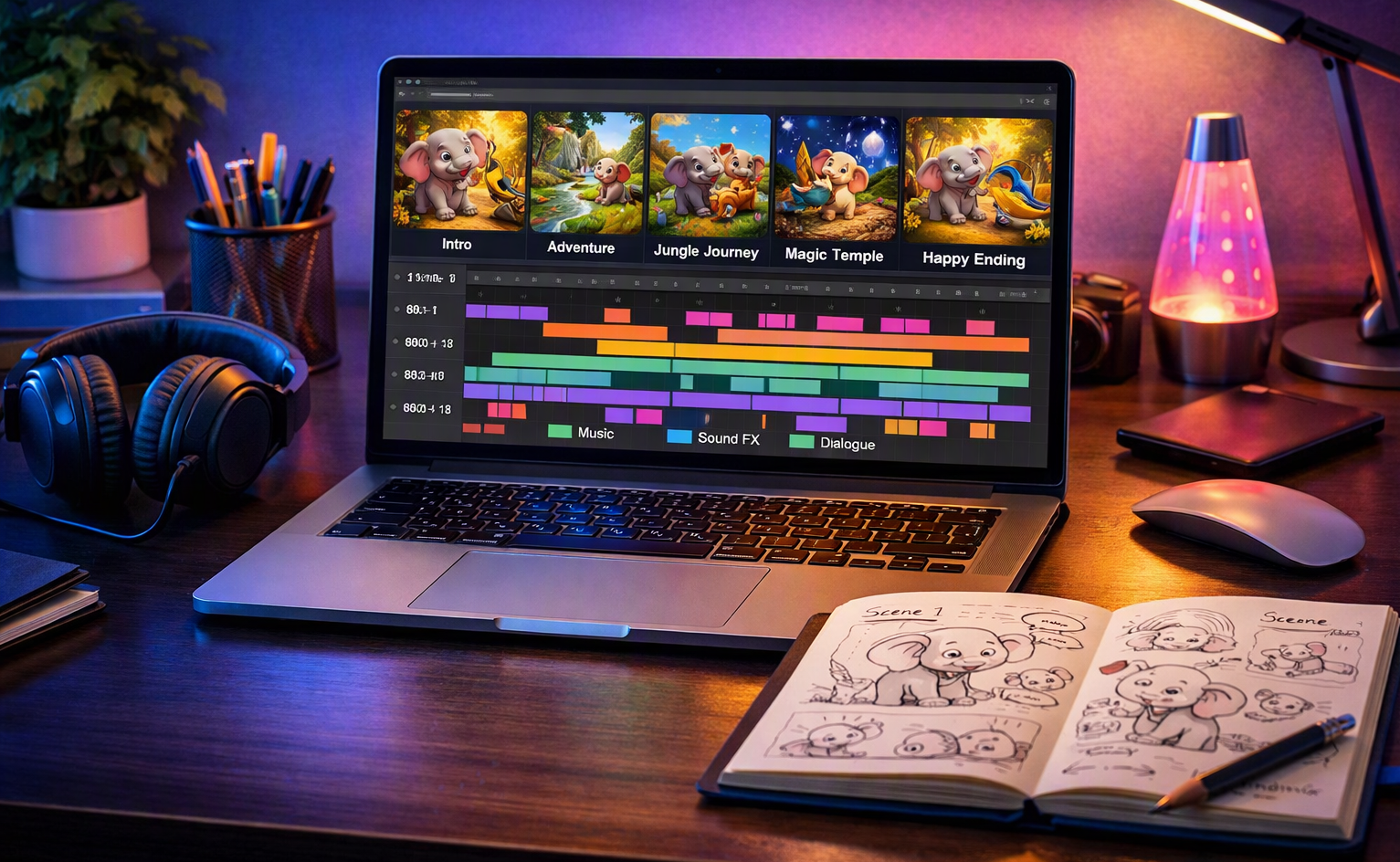
To produce an engaging 3-to-4-minute story without spending days rendering, follow this step-by-step pipeline:
[Gemini Script Prompt] ➔ [Character Anchor via Leonardo] ➔ [Motion via Veo / Kling] ➔ [Sarvam Indic Voiceover] ➔ [CapCut Assembly]
Step 1: Scripting with Google Gemini
Avoid prompting “Write a kids story.” Use precise structural guardrails.
Prompt Formula to paste into Google Gemini:
“Act as an award-winning Indian children’s book author. Write a 3-minute moral story for 5-year-old kids set in a vibrant Indian forest village. The main characters are Chintu (a playful baby elephant) and Meena (a clever sparrow). The moral is: ‘True strength lies in patience.’ Break the story into 12 distinct scenes. For every scene, provide: 1) Narrator line in simple, expressive Hindi/English, and 2) A detailed visual generation prompt.”
Step 2: Consistent Character Visuals
Nothing breaks immersion faster than an elephant that looks completely different in every scene.
Use an art tool like Leonardo.ai or Midjourney.
Pick a distinct visual style tag, such as:
2D vibrant Indian storybook illustration, rich gouache texture, soft lighting, Pixar-inspired, clean white outlines.Generate your hero character first. Save that image and use it as a Seed or Character Reference for all remaining scene prompts.
Step 3: Adding Motion with Gemini & Video Models
Static slide decks with AI voices often trigger YouTube’s “inauthentic content” flag. You need gentle motion.
Take your scene stills and upload them to image-to-video engines like Kling AI or experiment with Google’s video capabilities via Veo on Google AI Studio.
Keep movement simple: slow pans, blinking eyes, swaying jungle trees, or splashing water. Subtle 4-second motion cuts keep children engaged without overwhelming the viewer.
Step 4: Authentic Indian Voiceover with Sarvam AI
Standard English text-to-speech tools often sound unnatural when reading Indian character names like “Dadi Maa” or “Panchatantra”.
Use dedicated Indian voice engines like Sarvam AI, which are specifically trained on Indian speech patterns, Hindi, Hinglish, and regional languages like Tamil, Telugu, and Malayalam.
Select a warm, slower-paced storytelling voice (Meera or Arjun) to make the narration sound like a real person reading a bedside storybook.
Step 5: Final Editing in CapCut or VN
Drop your voiceover into the primary audio track.
Cut each video clip to match the spoken line (average cut duration: 3 to 5 seconds).
Add gentle sound effects: footsteps, chirping Indian mynas, gentle bell rings, and soft flute background music at -20dB.
Apply large, colorful, rounded captions with contrasting borders so toddlers and parents can read along.
Mastering cuts, transitions, and pacing is the foundation of high-retention video—learn the roadmap to become a video editor in 30 days to speed up your editing workflow.
4. Monetization Rules for an AI Kids YouTube Channel
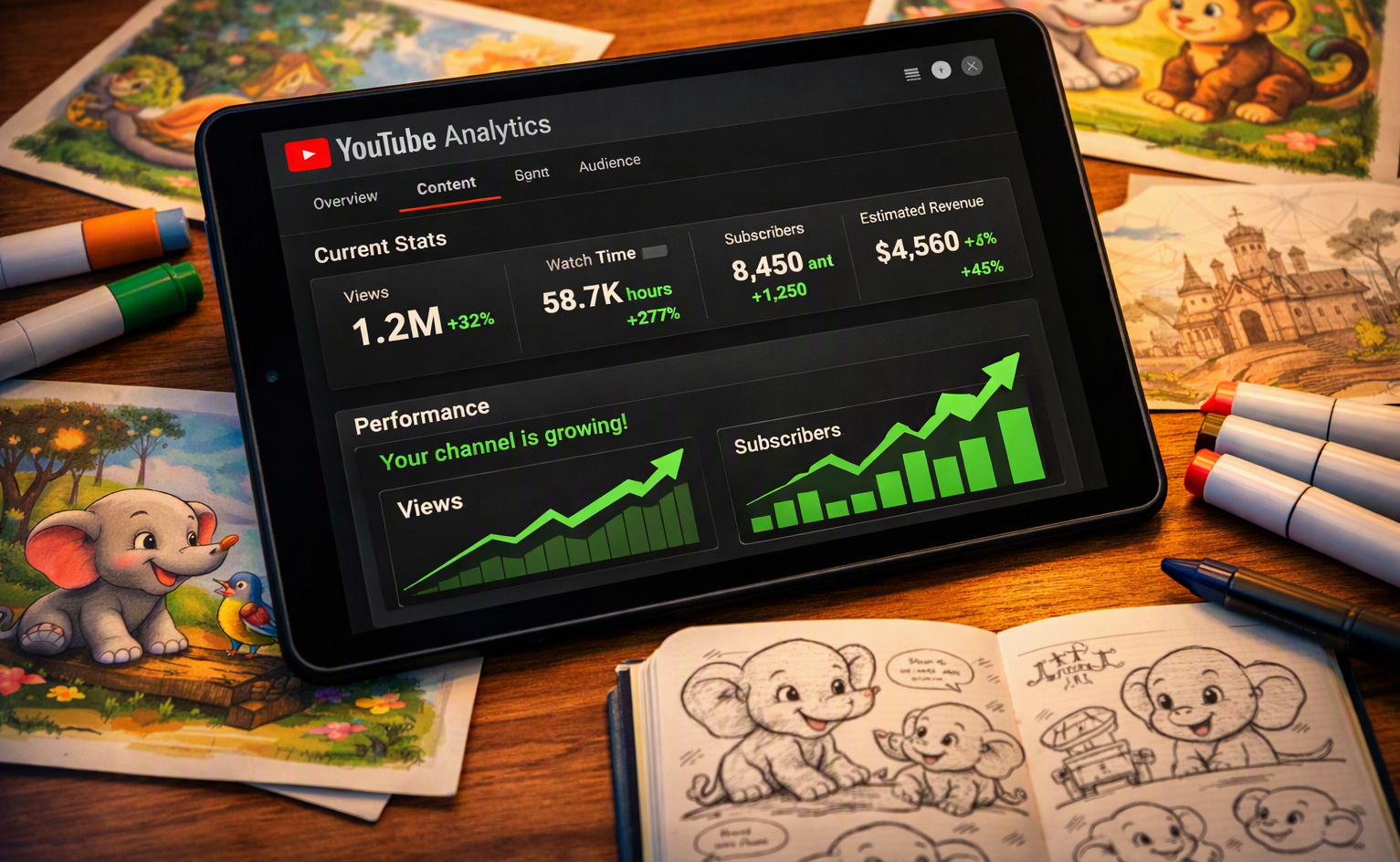
Many creators build an AI kids YouTube channel, reach 1,000 subscribers, and get rejected by the YouTube Partner Program (YPP). Here is how to keep your channel compliant with monetization policies:
        ┌────────────────────────────────────────────────────────┐
        │   YouTube YPP Safety Checklist for AI Channels         │
        ├────────────────────────────────────────────────────────┤
        │ [x] Avoid repetitive, templated slideshows             │
        │ [x] Use human-curated pacing & custom sound effects    │
        │ [x] Mark "Altered or Synthetic Content" in Studio      │
        │ [x] Set "Made for Kids" correctly to satisfy COPPA     │
        └────────────────────────────────────────────────────────┘
Beware of the “Repetitive Content” Flag: If YouTube’s automated reviewer detects that your videos use identical templates, looping stock visuals, and monotone robotic voices, monetization will be rejected under reused content guidelines. Make sure every script has an original storyline, bespoke sound design, and custom editing.
Disclose Synthetic Media: In YouTube Studio, always check the box indicating that your video contains Altered or Synthetic Content. YouTube values transparency and rewards channels that properly label realistic generative visuals.
The COPPA Factor (RPM Expectations): When you mark your content as “Made for Kids”, targeted ads and comments are disabled by law. While ad rates per 1,000 views (RPM) in India for kids’ content are modest (often ₹40 to ₹120 per 1,000 views), top channels balance this through massive volume (millions of views per month) and regional dubs.
Action Plan for Your First 30 Days
Days 1–5: Pick a focused sub-niche (e.g., Panchatantra moral lessons in Hindi or bilingual curiosity Shorts). Design 2 core recurring characters.
Days 6–10: Produce 5 test YouTube Shorts to master your prompt consistency and test viewer retention.
Days 11–30: Publish 2 long-form stories (3–4 minutes) and 3 Shorts per week. Monitor your retention graphs in YouTube Analytics: if viewers drop off in the first 10 seconds, trim your introductions and jump straight into the action.