
Tag

Deep Work

Browsing

Practical Dopamine Detox for Digital Workers: How to Reclaim Focus Without Quitting Your Job

Adopting a practical dopamine detox for digital workers is no longer a luxury—it is an operational necessity.
Every year, lifestyle influencers promote extreme wellness rituals. They tell you to lock your smartphone in a timed safe, move to a silent cabin for a week, or quit the internet entirely.
However, for developers, designers, writers, and knowledge workers, that advice is impractical. Your livelihood directly depends on a computer, browser tabs, and communication channels.
Telling a professional to abandon digital screens is like telling a surgeon to avoid operating rooms.
Consequently, most attempts at digital detoxing collapse within 48 hours. You return to your desk on Monday morning and immediately slip back into compulsive notification checking, tab hoovering, and mindless scrolling.
The solution is not escaping technology entirely. Instead, you need a friction-based protocol that removes compulsive stimulation while keeping your productive workflow intact.
Here is how to execute a sustainable, practical dopamine detox for digital workers without sacrificing your daily output.

Why Extreme Detoxes Fail Knowledge Workers

Mainstream dopamine fasts fail because they mistake the medium for the mechanism.
Dopamine is not an enemy to eliminate. It is the fundamental neurotransmitter of anticipation, motivation, and drive.
When you spend an entire workday switching rapidly between Slack pings, email badges, and algorithmic feeds, your brain becomes conditioned to micro-rewards delivered every few seconds.
    ┌───────────────────────────────────────────────────────────────┐
    │              UNSUSTAINABLE FAST VS. PRACTICAL DETOX           │
    ├───────────────────────────────┬───────────────────────────────┤
    │      EXTREME DIGITAL FAST     │   PRACTICAL DOPAMINE DETOX    │
    ├───────────────────────────────┼───────────────────────────────┤
    │ Lock all devices in a box     │ Enforce device-role separation│
    │ Impossible for working pros   │ Preserves core work channels  │
    │ Treats all screens as bad     │ Targets algorithmic loops     │
    │ High relapse rate (48 hours)  │ Sustainable long-term routine │
    │ Replaces work with boredom    │ Protects deep flow sessions   │
    └───────────────────────────────┴───────────────────────────────┘
When you attempt an extreme cold-turkey fast, the sudden drop in stimulation causes acute cognitive withdrawal. You feel restless, unmotivated, and anxious.
The moment you sit down to write code or analyze a spreadsheet, the absence of instant dopamine makes difficult tasks feel physically uncomfortable.
Learning to tolerate that friction and embrace boredom tolerance and stillness is the true foundation of cognitive stamina.

Step 1: The Production vs. Consumption Device Boundary

The single most effective rule for digital workers is separating the physical hardware you use to produce value from the hardware you use to consume content.
       ┌────────────────────────────────────────────────────────┐
       │             THE DUAL-DEVICE SEPARATION RULE            │
       ├────────────────────────────────────────────────────────┤
       │ PRODUCTION WORKSTATION (Laptop / Desktop):             │
       │ • Code editors, CMS, writing tools, spreadsheets       │
       │ • Zero social media bookmarks, logged-out feeds        │
       │                                                        │
       │ CONSUMPTION DEVICE (Smartphone / Tablet):              │
       │ • Personal chats, podcasts, reading apps               │
       │ • Kept in another room during focused work sprints     │
       └────────────────────────────────────────────────────────┘
When you browse social media or watch video commentary on the same laptop screen where you write client proposals, your subconscious mind links your workstation with passive entertainment.
As a result, the moment a work task becomes mentally demanding, your brain reflexively reaches for a new browser tab to seek an effortless dopamine hit.
  • Treat your computer strictly as an instrument of production: Log out of all personal social accounts on your work browser. Never watch passive reels or YouTube shorts on your primary work machine.
  • Isolate your smartphone physically: During 90-minute focus blocks, leave your phone in a drawer or another room. Removing physical sightlines to your phone immediately lowers baseline cortisol levels.

Step 2: System-Level Grayscale to Kill Visual Dopamine

Tech companies spend billions optimizing vibrant color palettes. Red notification badges, golden highlights, and high-contrast feeds are specifically engineered to trigger ancestral foraging instincts.
By turning your mobile operating system to Grayscale (Monochrome mode), you strip away the visual reward loops that hijack your attention:
[Vibrant UI Colors] ➔ [Visual Reward Spike] ➔ [Compulsive Scrolling]
[Monochrome Grayscale] ➔ [Flat Sensory Surface] ➔ [Brain Disengages in 60s]
  • On iPhone: Navigate to Settings $\rightarrow$ Accessibility $\rightarrow$ Display & Text Size $\rightarrow$ Color Filters. Toggle Color Filters on and select Grayscale.
  • Set up a Shortcut: Set your accessibility shortcut to triple-click the side button so you can toggle grayscale instantly when evaluating photos or videos for work.
  • On Android: Navigate to Settings $\rightarrow$ Accessibility $\rightarrow$ Color and motion $\rightarrow$ Color correction, then select Grayscale.
Within ten minutes of scrolling through a black-and-white feed, Instagram and YouTube feel remarkably flat and boring. Your brain stops registering the screen as an exciting digital playground, breaking the compulsive loop.

Step 3: Replace Frictionless Apps with Analog Anchors

A smartphone displaying religious text beside a spiral notebook with handwritten notes

Digital to-do lists and productivity software frequently contribute to the very overload they claim to cure. When an app provides infinite canvas space, your task list bloats with trivial micro-tasks that breed anxiety.
To protect your working memory, pair your digital workstation with analog physical anchors.
Maintaining a physical execution ledger forces you to evaluate tasks through physical friction. Writing a goal by hand takes physical effort, naturally filtering out low-value clutter.
Developing this level of self-directed discipline mirrors the mindset required to master high-value skills that can make you rich before 25. Consistent output always beats hyperactive tool-switching.

Step 4: The 48-Hour Practical Dopamine Detox Protocol

Individual walking outdoors in nature taking a digital break from computer screens

To reset your baseline sensitivity without pausing your client deliverables or team communications, implement this structured 48-hour protocol over a weekend or light work cycle:
PhaseCore ObjectivePermitted ActionsStrictly Prohibited Actions
Friday Evening ResetClear lingering cognitive loopsHandwrite Monday’s top 3 tasks; close all open browser tabsLate-night endless feed doomscrolling in bed
Saturday: Sensory ResetRe-sensitize auditory & visual baselinesWalking in nature, long-form reading, physical cookingPodcasts on 1.5x speed, video feeds, group chat debates
Sunday: Deep MonotaskingRe-engage deliberate focus2-hour single-task creative build without background noiseMultitasking, dual-screen setups, background video streaming
Monday: Calibrated Re-entryGuarded operational startMorning 90-minute work sprint before opening email inboxChecking notifications within the first 45 minutes of waking

The Verdict on a Practical Dopamine Detox for Digital Workers

Executing a practical dopamine detox for digital workers is not about retreating to the woods or pretending modern digital infrastructure does not exist.
It is about establishing intentional friction between your impulses and your devices.
When you strip away visual triggers with grayscale, enforce physical hardware boundaries, and protect your morning hours from algorithmic feeds, focus stops feeling like an exhausting battle of will.
Start small. Turn your smartphone to grayscale today, park it across the room for your next work sprint, and let your mind rediscover the calm clarity of unbroken focus.

 

The Two-Notebook Method Productivity System: Defeat Mental Overload Without Apps

Adopting the two-notebook method productivity framework is one of the most liberating decisions a modern professional can make. Today, the productivity industry pushes a relentless message: if you feel overwhelmed, you simply need another digital app.

Consequently, ambitious workers spend hours configuring complex Notion dashboards, color-coding task managers, and setting up automated calendar alerts.

However, this reliance on digital tools creates a dangerous trap. Instead of doing deep, meaningful work, you end up managing the software that tracks the work.

Every time you open your phone or laptop to check an app, you expose your brain to notification pings, email badges, and browser distractions. The result is chronic cognitive fragmentation and low-grade anxiety.

To reclaim your focus, you do not need more software. You need physical paper friction.

Here is how the simple, analog two-notebook method productivity system eliminates cognitive overload, calms your nervous system, and restores deep work.

1. Why Digital Productivity Apps Break Down Under Stress

Digital task managers are inherently frictionless. While that sounds advantageous, infinite digital space is precisely what causes cognitive overload.

When adding a task requires only two taps, your to-do list expands endlessly. Within weeks, you accumulate hundreds of overdue tasks.

Looking at a bloated digital screen triggers subconscious guilt. Therefore, you spend your morning reorganizing, tagging, and rescheduling tasks rather than executing them.

    ┌───────────────────────────────────────────────────────────────┐
    │              DIGITAL APPS VS. ANALOG NOTEBOOKS                │
    ├───────────────────────────────┬───────────────────────────────┤
    │      DIGITAL TASK APPS        │      TWO-NOTEBOOK METHOD      │
    ├───────────────────────────────┼───────────────────────────────┤
    │ Infinite space (list bloat)   │ Physical constraints (forces  │
    │ High notification friction    │  prioritization)              │
    │ Triggers screen fatigue       │ Zero notification distraction │
    │ Encourages task hoarding      │ Calms nervous system          │
    │ Shallow typing commitment     │ Daily reset via hand-copying  │
    │                               │ Deeper neural encoding        │
    └───────────────────────────────┴───────────────────────────────┘

Furthermore, apps live on devices built specifically to distract you. You open your task manager to review a project, but you notice an unread Slack message or social media update.

Before you realize it, your focus evaporates. Learning to step away from screens and build boredom tolerance and stillness begins with stripping away unnecessary digital noise.

2. The Neuroscience of Physical Ink: Why Handwriting Beats Typing

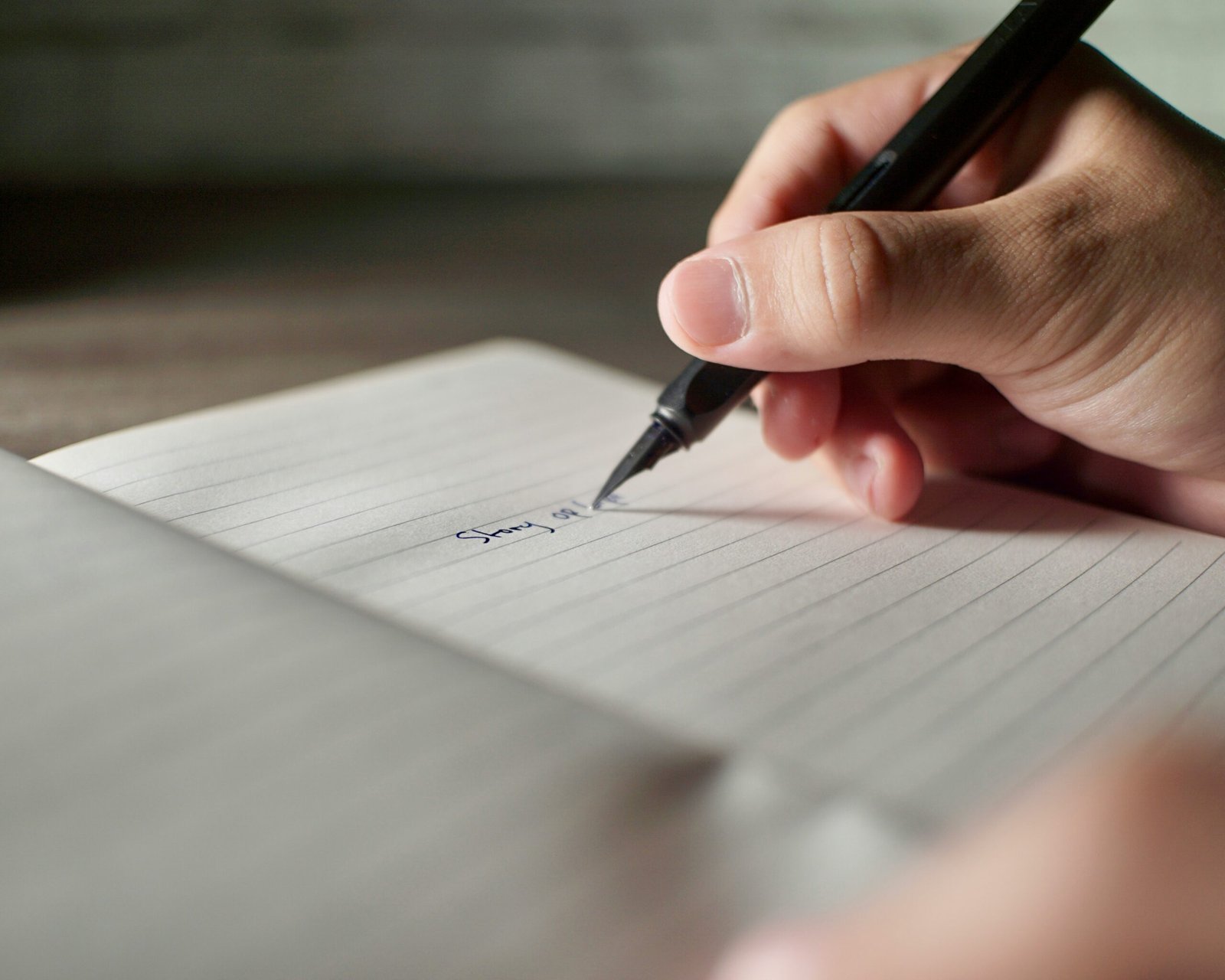
Close up of hands writing notes with a black ink pen on paper journal

Writing with physical ink on paper engages your brain completely differently than tapping on glass or a keyboard.

When you type, your fingers perform identical keystrokes regardless of the concept. Your brain processes typing at high speed without deep reflection, which is why people can type verbatim transcripts without understanding the content.

In contrast, neuroscientists studying cognitive processing have shown that handwriting requires fine motor control and spatial awareness. The visual and physical feedback loop forces your brain to summarize and evaluate ideas in real time.

[Sensory Motor Writing] ➔ [Neural Filtering] ➔ [Higher Cognitive Commitment]
  • Stronger Neural Encoding: Forming physical letters stimulates the brain’s reticular activating system, filtering noise and anchoring the memory.

  • Dopamine Regulation: Paper does not emit blue light, refresh feeds, or ping alerts. Working on an analog surface calms your pulse and stops impulsive dopamine-seeking behavior.

  • Psychological Commitment: Crossing off a completed task with a physical pen provides tangible, visceral satisfaction that tapping a digital checkbox cannot match.

3. The Architecture: Notebook A vs. Notebook B

The core of this system requires separating raw incoming chaos from deliberate daily execution. You do this by maintaining two distinct physical notebooks:

DimensionNotebook A: The Capture JournalNotebook B: The Execution Ledger
Physical FormatInexpensive, pocket-sized, rough paperHigh-quality, durable, desk-bound book
Primary RoleUnfiltered brain dump & raw meeting notesStrict daily priorities & needle-movers
Daily AccessCarried everywhere; stays open constantlySits exclusively on your work desk
Organization LevelCompletely messy, unformatted, temporaryPristine, structured, single-page daily log
LifespanFilled quickly and recycled regularlyArchived as a permanent record of output
       ┌────────────────────────────────────────────────────────┐
       │             THE TWO-NOTEBOOK INFORMATION FLOW          │
       ├────────────────────────────────────────────────────────┤
       │ 1. ALL incoming thoughts enter Notebook A (Raw Dump)   │
       │ 2. Evening Filter: Review and discard 80% of noise     │
       │ 3. Migrate top 3 vital priorities to Notebook B        │
       │ 4. Next day: Work ONLY from Notebook B with zero tabs  │
       └────────────────────────────────────────────────────────┘

Notebook A: The “Capture Journal” (The Brain Dump)

Notebook A is your mental net. It should be an inexpensive, portable notebook that fits in your pocket or bag.

Whenever a thought enters your head—a call to make, an errand, an idea during a commute, or quick meeting notes—write it down in Notebook A immediately.

Do not worry about neat handwriting, dates, or tags. The sole purpose of the Capture Journal is to get thoughts out of your working memory so your prefrontal cortex remains clear.

Notebook B: The “Execution Ledger” (The 3 Needle-Movers)

Notebook B never leaves your desk. It is your strategic command center.

Each evening, open Notebook B to a fresh, clean page. Write tomorrow’s date at the top. Underneath, write down no more than three critical priority tasks for the entire day.

These are your non-negotiable needle-movers. If you accomplish only those three items, your day is an undisputed success. By deliberately restricting your execution list to three tasks, you force ruthless prioritization that software cannot enforce.

4. The Daily Migration Ritual: How to Close Your Mental Loops

Hardcover notebook resting on a clean desk under a warm evening lamp

The secret that makes the two-notebook method productivity workflow sustainable is the evening migration ritual.

At the end of your workday, set aside five minutes for this closing protocol:

[Open Notebook A] ➔ [Scan & Strike Irrelevant Notes] ➔ [Hand-Copy 3 Tasks to B] ➔ [Shut Both Books]
  1. Review Notebook A: Scan the raw notes, phone numbers, and random thoughts collected during the day.

  2. Discard the Trivial: You will quickly discover that roughly 70% of the reactive tasks scribbled down during the day do not actually matter. Strike through them without guilt.

  3. Migrate the Vital Few: If a task represents a genuine priority, physically write it down onto tomorrow’s clean page in Notebook B.

  4. The Physical Friction Filter: Having to manually hand-copy a task forces you to evaluate its true value. If a task is not worth the ten seconds it takes to write by hand, it is not worth your valuable focus hours.

  5. Close the Books: Shut both notebooks and step away from your desk. This physical action signals to your subconscious mind that the workday is complete, preventing residual stress from invading your evening.

Building this level of disciplined personal clarity develops the exact focus needed to build scalable skills that can make you rich before 25. Consistent output always beats hyperactive tool switching.

5. Common Mistakes to Avoid with Analog Systems

Transitioning from digital apps back to physical notebooks is simple, but watch out for these early pitfalls:

  • Buying Complex Planners: Avoid expensive pre-printed productivity planners filled with habit wheels, water trackers, and quote boxes. They replicate the very complexity you are trying to escape. Plain lined, dot-grid, or blank pages work best.

  • Mixing the Books: Never write daily execution tasks directly into Notebook A, and never scribble meeting notes in Notebook B. Keeping their roles strictly separated protects the clean authority of your Execution Ledger.

  • Listing Too Many Tasks: If your Execution Ledger contains 12 items every morning, you have simply recreated a messy digital to-do list on paper. Keep your daily list strictly capped at three primary objectives.

The Verdict on the Two-Notebook Method Productivity Routine

Real productivity is not measured by the number of digital tools you sync or the aesthetic layout of your software boards.

Productivity is measured by one metric: did you complete your most meaningful work today without burning out?

Tomorrow morning, close your browser tabs and put your phone in another room. Open your physical Execution Ledger, place your pen on paper, and do the real work waiting in front of you.


The Fajr Productivity Window: Why the Prophetic Morning Beats the 5 AM Club

Learning how to leverage the fajr productivity window is one of the most transformative lifestyle decisions an ambitious individual can make. Long before self-help authors commercialized the “5 AM Club” or tech executives bragged about early routines, Islamic tradition built daily success around the early morning.

In an authentic tradition, the Prophet Muhammad (ﷺ) supplicated: “O Allah, bless my nation in their early mornings” (Sunan Abi Dawud 2606).

However, many adults experience a persistent disconnect. They wake up for Fajr, pray in a daze, and immediately crawl back under the covers.

Consequently, they wake up two hours later with heavy sleep inertia, brain fog, and an urgent rush to get ready for work. By retreating into fragmented post-Fajr sleep, you sacrifice the most biologically alert and quiet hours of your entire day.

Transforming this early window into an engine for deep work does not require sleepless exhaustion. Instead, it requires syncing your biological clock with intentional habit design.

1. The Science Behind the Fajr Productivity Window

Why does your mind feel distinctly clear at dawn?

hourglass resting on smooth granite

The benefits are not simply spiritual; they are deeply neurological and hormonal.

       ┌────────────────────────────────────────────────────────┐
       │             DAWN NEUROCHEMISTRY ARCHITECTURE           │
       ├────────────────────────────────────────────────────────┤
       │ 1. Cortisol Awakening Response (Natural Alertness)     │
       │ 2. Zero External Notification Friction                 │
       │ 3. Prefrontal Cortex Willpower at Peak Battery         │
       │ 4. Quiet Ambient Environment (Sensory Calm)            │
       └────────────────────────────────────────────────────────┘

The Cortisol Awakening Response (CAR)

Roughly 30 to 45 minutes after waking at dawn, your endocrine system triggers the Cortisol Awakening Response.

While chronic stress-induced cortisol is unhealthy, this natural morning spike is beneficial. It elevates arterial blood pressure, activates neural networks, and prepares your brain for concentrated focus. Going back to bed during this natural surge confuses your circadian rhythm, which causes morning grogginess.

Zero Ambient Cognitive Load

At 5:30 AM, your inbox is completely silent. Your team is not sending urgent Slack notifications, family members are resting, and group chats are quiet.

Consequently, your brain operates with minimal cognitive friction. Protecting this quiet space allows you to cultivate boredom tolerance and stillness before the noisy demands of the outside world take over.

2. The 5 AM Club vs. The Prophetic Dawn Routine

Modern productivity culture often frames early mornings as a grueling test of willpower. In contrast, the Islamic morning routine provides a balanced, holistic rhythm:

Productivity DimensionThe Modern “5 AM Club” TrendThe Prophetic Dawn Architecture
Primary MotivationCorporate hustle & material outputSpiritual alignment & sustainable barakah
Morning InitiationHigh-energy cold shower & loud alarmsMindful ablution (Wudu) & focused prayer
Nighttime PrerequisiteOften forces late nights with early alarmsStrictly prioritizes early sleep after Isha
Rest ProtocolDisregards natural biological rest cyclesIncorporates the midday power nap (Qaylulah)
Emotional StateHigh-pressure, self-reliant disciplineSerene, purposeful, and grounded focus

3. The 90-Minute Post-Fajr Deep Work Protocol

Single green sprout growing through clean stone tiles under soft morning light

To make the fajr productivity window work for your career or studies, follow this structured 90-minute operational block:

[Fajr Prayer & Dhikr: 20 Min] ➔ [Hydration & Movement: 10 Min] ➔ [The Deep Work Block: 60 Min]

Phase 1: Spiritual Grounding (Minutes 0 to 20)

Never jump from your prayer mat directly to a computer screen.

  • Complete your prayer with presence and unhurried recitation.

  • Spend 5 to 10 minutes finishing your morning remembrance (Adhkar).

  • This deliberate pause centers your nervous system and establishes emotional equilibrium before the workday begins.

Phase 2: Physiological Ignition (Minutes 20 to 30)

  • Drink a large glass of room-temperature water with a pinch of mineral salt or lemon to counter overnight dehydration.

  • Do not look at your phone. If you open social feeds or breaking news right now, your dopamine receptors are instantly hijacked.

  • Stretch lightly or complete a brief 5-minute walk to stimulate circulation.

Phase 3: The “One Needle Mover” Block (Minutes 30 to 90)

Dedicate this uninterrupted 60-minute window exclusively to your highest-leverage task.

  • If you are a student: Review challenging study material or complete difficult technical problem sets.

  • If you are a creator: Write your core articles, edit videos, or outline new business projects.

  • If you are a working professional: Solve complex problems, analyze data, or build career assets without interruptions.

Protecting this daily hour gives you 365 hours of undisturbed deep work every year—the equivalent of nine standard 40-hour workweeks dedicated entirely to your personal growth.

4. How to Overcome the Post-Fajr Sleep Trap

The most common objection is straightforward: “If I stay awake after Fajr, I crash by 11:00 AM.”

If you crash mid-morning, the problem is not your wake-up time. The problem is your evening schedule. You cannot conquer the morning if you consistently lose the night.

        ┌────────────────────────────────────────────────────────┐
        │            EARLY MORNING SUSTAINABILITY RULES          │
        ├────────────────────────────────────────────────────────┤
        │ [x] Sleep within 60 minutes after Isha prayer          │
        │ [x] Stop heavy meals 3 hours before sleeping           │
        │ [x] Put your smartphone in another room at night       │
        │ [x] Take a strategic 20-minute afternoon Qaylulah      │
        └────────────────────────────────────────────────────────┘
  1. Protect the Post-Isha Hours: The Prophet (ﷺ) traditionally disliked unnecessary conversation and idle socializing after Isha prayer (Sahih al-Bukhari 568). Turn off blue-light screens and prepare for bed early.

  2. Reclaim the Sunnah of Qaylulah (The Midday Power Nap): Modern sleep researchers from organizations like the Sleep Foundation confirm that a brief 20-minute nap between 1:00 PM and 2:30 PM restores alertness, reduces cardiovascular stress, and prevents evening fatigue without disrupting nighttime sleep.

  3. Use the 15-Minute Rule: If you are accustomed to sleeping immediately after Fajr, staying awake will feel difficult for the first four days. Begin incrementally: commit to staying awake for just 15 minutes the first week, 30 minutes the second week, and gradually expand to the full 90-minute block.

The Verdict on the Fajr Productivity Window

The modern world is obsessed with finding life hacks to get ahead. Yet, the most potent framework for focus, peace, and productivity has been readily accessible every single morning.

Tomorrow, when the dawn call to prayer finishes, do not return to bed.

Drink your water, sit at your desk in the silence of the dawn, and dedicate that sacred, quiet hour to your long-term goals. That quiet morning choice is where genuine momentum begins.