
Checking the weather tomorrow is something most of us do every single day — before we plan a morning run, decide what to wear, or figure out whether to carry an umbrella. Yet despite how often we check tomorrow’s weather forecast, very few people understand what’s actually behind those predictions, or how to read them with confidence.
In this guide, we’ll walk you through everything you need to know about checking and understanding the weather tomorrow — from the science behind short-range forecasts to the best tools available, practical preparation tips, and why accuracy matters more than ever in today’s world.
What Does a “Weather Tomorrow” Forecast Actually Tell You?
When you look up the weather for tomorrow, you’re accessing a short-range forecast — typically a 24-hour prediction generated using real-time atmospheric data, satellite imagery, and numerical weather prediction (NWP) models. These models process billions of data points gathered from weather stations, weather balloons, ocean buoys, and satellites orbiting the Earth.
Modern weather forecasting has become remarkably accurate. According to the National Oceanic and Atmospheric Administration (NOAA), today’s 24-hour weather forecasts are correct roughly 95% of the time for basic conditions like temperature ranges and precipitation likelihood. That means when you check the weather tomorrow, you can trust those predictions with a high degree of confidence — as long as you’re reading them correctly.
A standard tomorrow’s weather forecast includes:
- High and low temperatures — the expected range for the day
- Precipitation probability — the percentage chance of rain, snow, or other precipitation
- Wind speed and direction — important for outdoor activities and travel
- Humidity levels — affect how temperature actually feels (heat index or wind chill)
- UV Index — how intense solar radiation will be at ground level
- Sunrise and sunset times — useful for planning outdoor activities
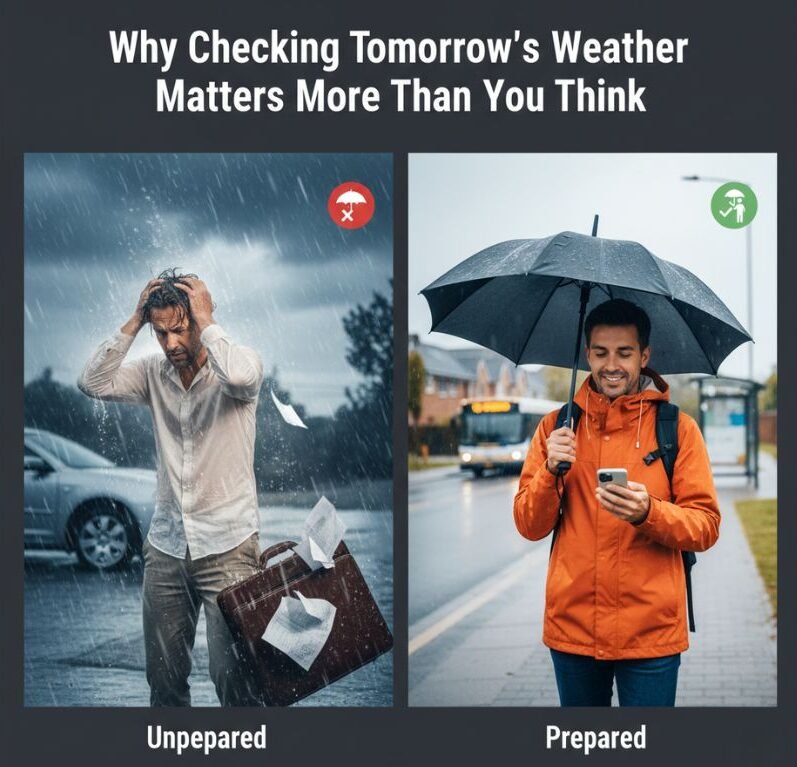
 Why Checking Tomorrow’s Weather Matters More Than You Think
 Why Checking Tomorrow’s Weather Matters More Than You Think
Many people glance at the weather tomorrow and move on without giving it much thought. But understanding the forecast in depth can make a real difference in your daily life, safety, and even finances.
Personal Safety: Severe weather events — thunderstorms, ice, dense fog, high winds — can pose serious hazards if you’re caught unprepared. Checking the weather tomorrow the night before, gives you time to adjust plans, delay travel, or take shelter precautions.
Health and Well-being: Extreme heat or cold can affect vulnerable populations, including the elderly, children, and those with chronic conditions. Knowing whether tomorrow brings a heat advisory or a hard freeze lets caregivers and individuals take preventative action.
Outdoor Activities: Hikers, cyclists, gardeners, construction workers, and athletes all rely on accurate weather tomorrow to stay safe and productive. A forecast check takes 30 seconds and can save hours of disruption.
Economic Decisions: Farmers, event planners, contractors, and retail businesses make significant decisions based on upcoming weather. Even for individuals, knowing that tomorrow will bring heavy rain could affect whether you choose to drive or use public transit, potentially saving time and money.
How to Read a Weather Forecast Like a Pro
 How to Read a Weather Forecast Like a Pro
Understanding the weather tomorrow isn’t just about knowing if it will rain. Here’s how to interpret the most important forecast elements:
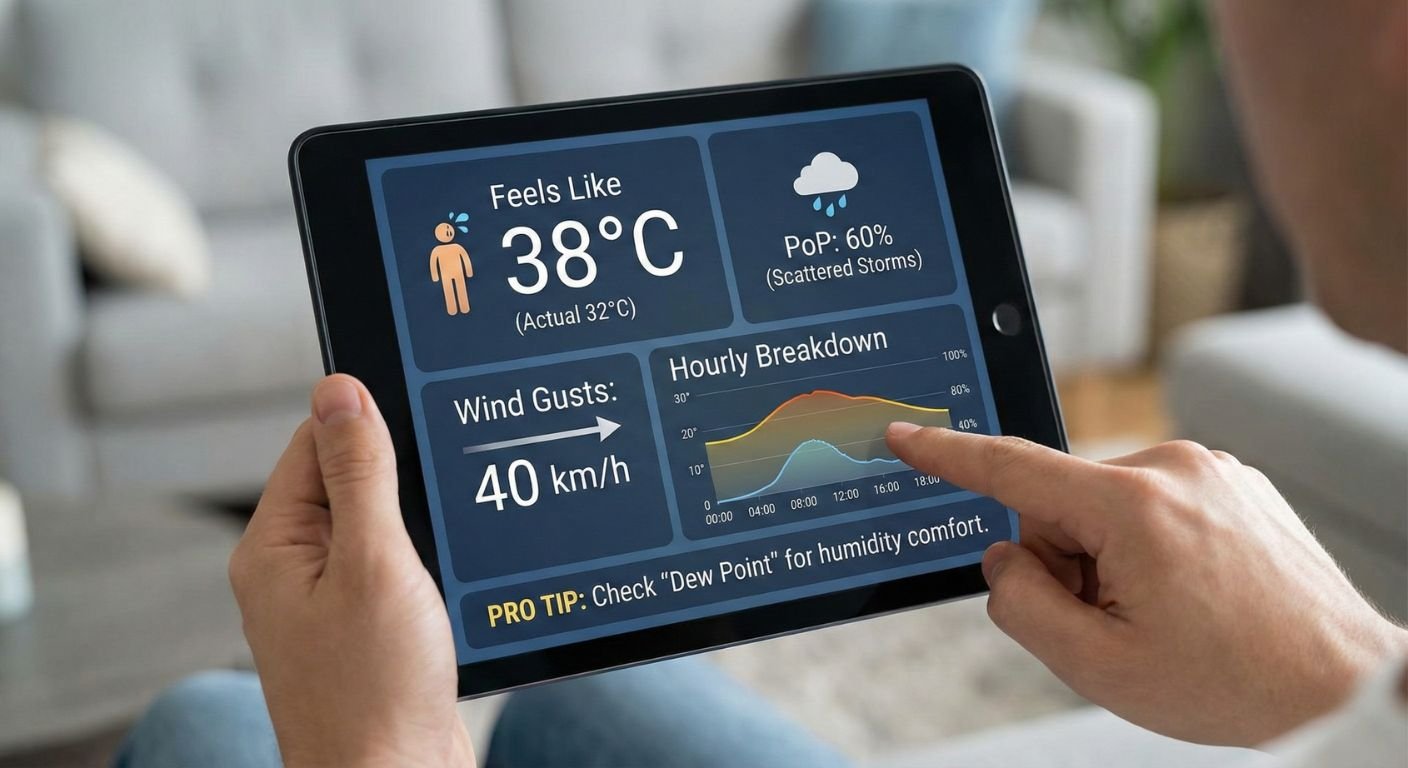
Precipitation Probability: A 40% chance of rain does NOT mean it will rain 40% of the time. It means there’s a 40% probability that measurable rainfall will occur somewhere in the forecast area. Many people misread this and either over-prepare or under-prepare as a result.
“Feels Like” Temperature: Raw temperature numbers don’t tell the whole story. In winter, wind chill can make 35°F feel like 20°F. In summer, high humidity can make 88°F feel like 100°F. Always check the “feels like” or “apparent temperature” when planning tomorrow’s activities.
Wind Gusts vs. Sustained Winds: Forecasts often list both average wind speed and peak gusts. If tomorrow’s weather shows 15 mph winds with gusts up to 35 mph, the gusts matter more for activities like cycling or driving a high-profile vehicle.
Hourly Breakdowns: Most modern weather apps let you view the weather tomorrow on an hour-by-hour basis. This is invaluable — a day that looks stormy overall might only have rain in the morning, clearing by noon for an afternoon outdoor event.
The Best Tools for Checking the Weather Tomorrow
There are dozens of apps and websites available for checking tomorrow’s weather forecast. Here are the most reliable, based on forecast accuracy and ease of use:
National Weather Service (weather.gov): For users in the United States, this is the gold standard. The NWS publishes detailed, expert-reviewed forecasts with official severe weather alerts. It’s free, ad-free, and uses the most advanced government weather models.
Weather.com (The Weather Channel): A popular option with a user-friendly interface, hourly breakdowns, and detailed weather tomorrow forecasts, including radar maps, precipitation timelines, and lifestyle indices like allergy and flu levels.
AccuWeather: Known for its “MinuteCast” feature, which provides minute-by-minute precipitation forecasts. If you’re wondering exactly when tomorrow’s rain will start and stop, AccuWeather is particularly useful.
Dark Sky / Apple Weather: Integrated into iOS devices, Apple Weather (which absorbed Dark Sky) provides hyperlocal forecasts and excellent precipitation timing. Great for mobile users who want tomorrow’s weather at a glance.
Google Weather: Simply typing “weather tomorrow” into Google gives an instant forecast powered by The Weather Channel data. Fast, convenient, and accurate for most everyday needs.
Preparing for Tomorrow’s Weather: Practical Tips
 Preparing for Tomorrow’s Weather: Practical Tips
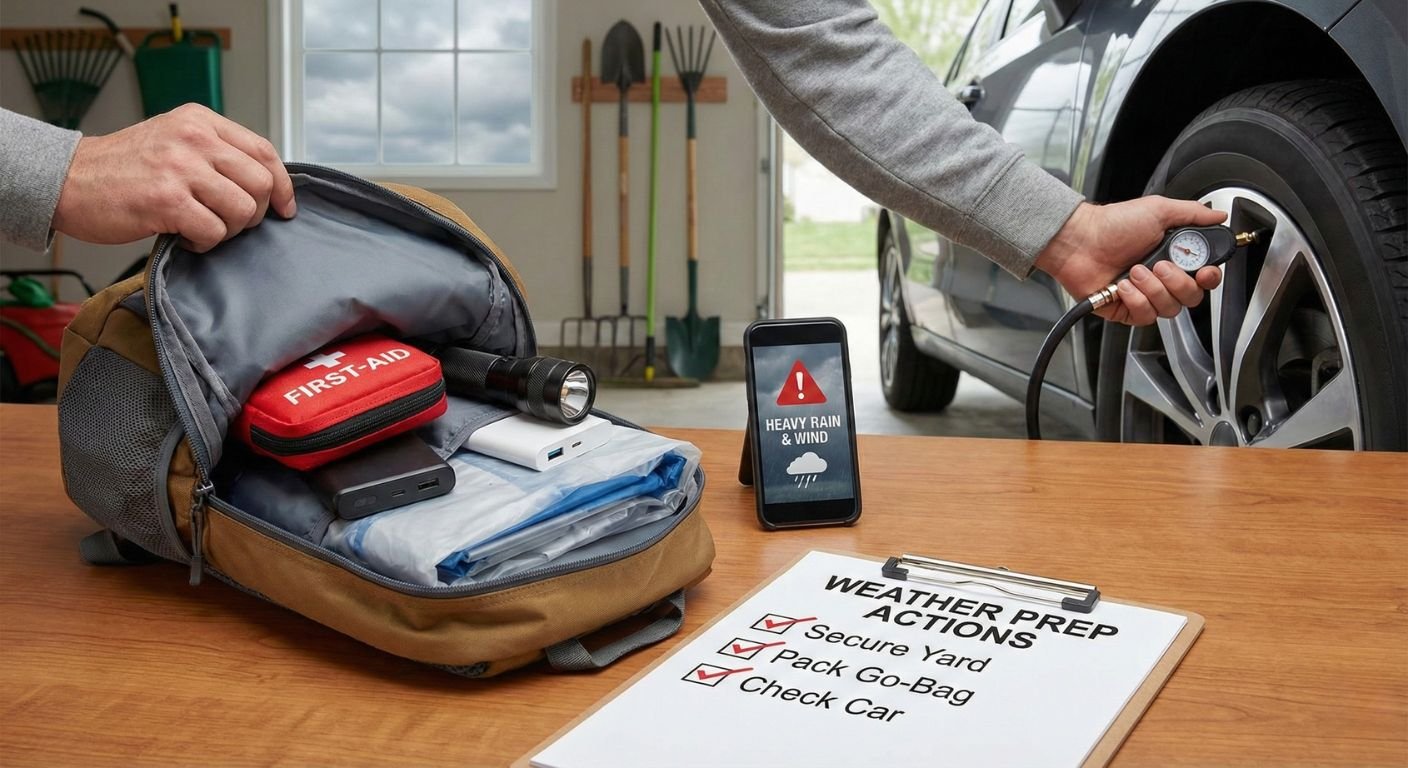
Once you’ve checked the weather tomorrow, preparation is the next step. Here’s how to act on what you find:
For Rain or Thunderstorms: Pack an umbrella or rain jacket. If severe thunderstorms are forecast, avoid outdoor activities, keep electronics unplugged during storms, and have a plan if lightning is expected during your commute or outdoor plans.
For Extreme Heat: Stay hydrated, avoid strenuous outdoor activity during peak afternoon hours (typically 12–4 PM), wear lightweight and light-colored clothing, and check on elderly neighbors or family members.
For Cold, Ice, or Snow: Allow extra travel time, ensure your vehicle is prepared (check tire pressure, washer fluid, and battery), dress in layers, and keep a cold-weather emergency kit in your car.
For High Winds: Secure outdoor furniture and decorations, avoid parking under trees or near scaffolding, and delay cycling or motorcycling if gusts are expected above 30 mph.
A Note on Forecast Reliability
Short-range weather forecasts have improved dramatically over the past few decades. The atmosphere is a chaotic system, and unexpected developments — particularly with convective storms — can surprise even the most sophisticated models. For this reason, meteorologists encourage people to check the weather tomorrow from multiple reputable sources and to pay close attention to official weather alerts issued by government meteorological agencies.
If a severe weather watch or warning is issued for tomorrow, always take it seriously, even if conditions outside currently appear calm.
Checking the weather is a small habit that pays enormous dividends in safety, comfort, and preparedness. Whether you rely on a government forecast portal, a smartphone app, or a quick Google search, the key is knowing how to read and interpret what you find — not just glance at a number and move on.
With reliable short-range forecasting tools now at everyone’s fingertips, there’s no reason to be caught off guard by tomorrow’s weather. Make it a nightly habit: check the forecast, prepare accordingly, and step into tomorrow with confidence.
Stay weather-aware, stay prepared. For real-time updates and alerts, always check your local National Weather Service office or a trusted weather app before heading out.